- AI changes testing work but does not remove the need for accountable human judgement.
- Testing leadership must move beyond execution into risk, evidence and quality governance.
- AI-assisted testing requires its own controls, including model evaluation and assurance of automation behaviour.
- Professional capability, national curricula and communities of practice will shape who benefits from the transition.
- Claims about speed, cost, defect reduction and commercial advantage are preserved as arguments made in the address, not presented as independently verified outcome guarantees.
Distinguished ladies and gentlemen, Leaders, honoured colleagues, fellow professionals, Innovators and pioneers of quality assurance in our digital nation—
Good morning.
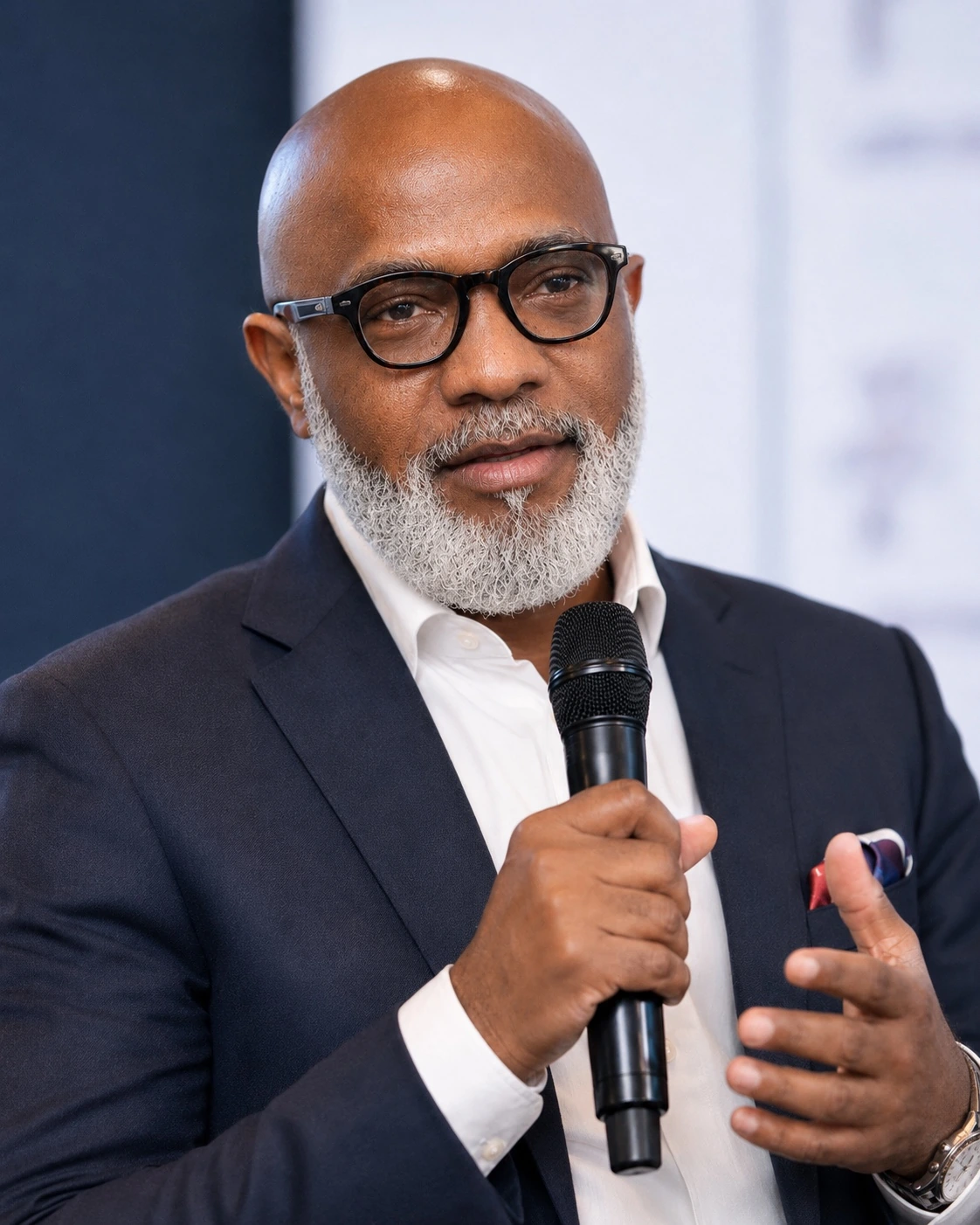
It is an honour, and indeed a profound privilege, to stand before the Association of Nigeria Software Testers— a community that embodies excellence, diligence, and national progress— at a moment when the very definition of software testing is being rewritten before our eyes.
Today, we gather not merely for another professional convening, but at a defining moment for our discipline and for the global technology landscape.
When ANST first invited me to deliver this bold and provocative keynote, I felt both humbled and energised. Because this conversation—at the intersection of Artificial Intelligence and Software Testing—is not only timely; it is existential.
Our keynote asks: “AI and the Full Software Testing Lifecycle: Replacement or Revolution?”
In other words: Is artificial intelligence coming to take our jobs, or is it calling us to rise into a new era of mastery, relevance, and leadership?
The Evolution of AI in Testing — A New Dawn, Not a Sunset
For decades, the software testing profession has been the guardian of trust. We have been the gatekeepers of quality. We have been the quiet custodians ensuring that systems—whether powering governments, hospitals, banks, or small enterprises—behave exactly as intended.
But today, the world is changing faster than any test cycle we have ever executed.
Artificial Intelligence is no longer a distant promise. It is here—writing code, generating test cases, predicting defects, automating entire test suites, and learning from user behaviour at a scale no human can match.
So the question before us is not, “Is AI coming?” It is already here.
The real question is: Will AI replace the software tester, or will it revolutionise the way we test?
My brothers and sisters in quality, the answer is clear: AI is not here to replace us. AI is here to reveal who among us is ready to evolve.
The Myth of Replacement
Let us address the myth— the persistent whisper that echoes across industries:
“AI will take our jobs.” “AI will automate everything.” “AI has no use for testers.”
This view is narrow. It misunderstands the essence of our craft.
Testing is not simply the execution of scripts. Testing is assurance. Testing is critical thinking. Testing is contextual intelligence, risk judgement, ethical discernment, and human empathy.
AI can generate a thousand test cases in seconds. But only a human mind can ask:
Are we testing the right thing? Does this outcome make sense in the real world? What does this mean for the end user, for society, for trust?
So let me say this plainly:
AI will not replace the tester. But the tester who refuses to learn, adapt, and innovate… will be replaced by another tester who does.
AI can execute. But it cannot yet think like a tester. It can analyse. But it cannot understand context like a seasoned QA professional. It can predict. But it cannot defend quality in the boardroom.
AI is powerful. But testers are purposeful. And purpose still wins.
AI’s Impact on the Full Testing Lifecycle — A True Revolution
AI is not the end of testing; it is the next chapter of testing.
It is not a single tool, but an ecosystem reshaping every phase of the lifecycle:
1. Test Discovery & Requirements Analysis
AI validates requirement clarity, detects ambiguities, and generates acceptance criteria— transforming an intuition-driven task into a data-driven, insight-rich discipline.
2. Test Planning
AI predicts optimal coverage, identifies high-risk modules before coding even begins, and estimates effort with remarkable accuracy—prioritising intelligently using predictive analytics.
3. Test Specification & Design
Model-based generation produces intelligent, adaptable test scenarios based on real-world user behaviour— even crafting exploratory scripts from user stories and acceptance criteria.
4. Test Execution & Defect Management
Massive parallel execution across cloud platforms can accelerate feedback. AI-assisted tools can run large regression suites, support failure analysis and propose maintenance changes. So-called self-healing must be governed carefully because an automated change can conceal a genuine regression. Machine learning can also support defect triage by clustering duplicates and identifying patterns for human review.
5. Test Closure & Continuous Optimisation
AI automates analysis, extracts insights, forecasts quality risks, and recommends improvements for future sprints.
This is not replacement. This is not incremental improvement.
This is amplification. This is augmentation. This is a revolution— a reinvention of the testing lifecycle into a predictive, autonomous, high-speed engine of quality.
AI is not stealing our craft. AI is elevating it.
The Tester’s New Mandate
As testers, leaders, educators, and advocates, our mandate is threefold:
1. Adapt.
Continuously reskill. Understand how AI works. Learn how to test AI itself—its data, models, bias, fairness. The new frontier is not only testing software, but ensuring AI systems are ethical, transparent, and trustworthy.
2. Innovate.
Use AI not merely as a productivity booster, but as a partner in creativity— combining human intuition with machine intelligence to uncover risks no static test case could ever reveal.
3. Lead.
Take your seat at the strategic table. As organisations race toward AI integration, testers must become the conscience of technology— ensuring that in our quest for speed and intelligence, we do not compromise integrity or trust.
In the age of AI, trust is the new currency— and the tester is the banker of trust.
The Next Two Years — A New Testing Frontier
The next 24 months will redefine QA globally and here in Nigeria.
We will witness:
- A shift from manual execution toward intelligent oversight.
- Testers evolving into quality architects, AI supervisors, data interpreters and risk strategists.
- Shorter testing cycles where automation is suitable and well governed.
- Hybrid teams in which people remain accountable for judgement and consequence.
- Greater pressure on test leadership to demonstrate measurable value.
- New competencies in AI-assisted automation, test data engineering, model evaluation, prompt design, domain expertise, and ethical and regulatory governance.
This, distinguished colleagues, is the new testing frontier.
The African Imperative
Africa is not behind. Africa is becoming.
Nigeria is not late. Nigeria is awakening.
Our young testers are already exploring LLMs, writing automation in Playwright, learning Python, contributing to open-source AI initiatives.
We have a once-in-a-generation opportunity to leapfrog into the future— to make Africa a global centre of testing excellence, powered by AI, innovation, and digital trust.
And that, my friends, is what ANST represents.
Strategic Imperatives for Organisations
Organisations wanting to remain competitive must stop asking, “Should we adopt AI?” and start asking, “How fast can we transform our testing maturity?”
Four imperatives stand out:
1. Invest in Upskilling, Not Downsizing
Replace fear with capability. Empower testers to become AI supervisors, model evaluators, automation strategists, and risk analysts.
2. Build AI-Integrated Testing Pipelines
Embed AI from requirements to production monitoring, making quality continuous, predictive, and proactive.
3. Redesign QA Operating Models
Evolve from siloed testing teams to Quality Engineering organisations that influence architecture, strategy, and business outcomes.
4. Treat Data as a Strategic Asset
AI thrives on data. The future belongs to organisations that manage test data with intention, governance, and precision.
The address argued that organisations making these moves could gain a material advantage, provided adoption is governed and outcomes are measured rather than assumed.
What This Means for Profitability
Let me be unequivocal:
The address argued that AI-assisted testing should be considered not only as a potential efficiency measure, but as a possible contributor to commercial performance when it is well governed and its effects are measured.
The address argued that well-governed AI-assisted testing can contribute to:
- Faster feedback and time to market.
- Lower defect leakage where controls are effective.
- Reduced avoidable rework.
- More reliable customer outcomes.
- Faster, evidence-led innovation cycles.
The address presented faster, more reliable testing as a potential organisational and national economic opportunity, while this web edition makes explicit that such outcomes depend on context, governance and evidence.
The address invited Nigeria to pursue leadership in African Quality Engineering rather than treating that leadership as an assured outcome.
A Heart-to-Heart Closing
Allow me to speak plainly:
Do not fear AI. Do not shrink from disruption. Do not allow yourself to be written out of a story that needs your expertise now more than ever.
Instead—
Learn. Adapt. Innovate. Lead.
The tools of yesterday will not build the systems of tomorrow. But the mindset of a great tester—curiosity, scepticism, precision, integrity—remains irreplaceable.
Institutions deploying AI still require your judgement, ethical insight, understanding of human behaviour and ability to ask the right questions.
You are not being replaced. You are being upgraded.
Let us stop asking, “Will AI take our jobs?” and start asking, “How will we use AI to elevate our profession?”
Let us be the generation of testers who did not fear change, but mastered it. Who turned disruption into direction, and replacement into revolution.
The world will always need testers. Because the world will always need trust. And trust—especially in the age of intelligent systems— is the ultimate test.
A Call to National Action
Let us make Nigeria the centre of AI-driven Quality Engineering in Africa.
Let us establish:
- A national QA and AI curriculum.
- Industry certification for AI-supervised testing.
- Centres of Excellence for Quality Engineering innovation.
- Stronger collaboration among government, academia and industry.
- Support for Nigerian-built quality tools.
The future will not wait for us. We must seize it—boldly, strategically, intelligently.
Ladies and gentlemen, we stand at a historic crossroads.
One road leads to obsolescence. The other leads to mastery, relevance, and national transformation.
The question is not whether AI will change software testing— it already has.
The real question is: Will you stand on the sidelines, or will you lead the revolution?
I believe—deeply—that Nigerian testers are not spectators in the age of AI. We are architects. We are pioneers. We are the guardians of digital trust.
And together… we will build a future where AI does not replace us, but amplifies us.
Thank you. God bless the Association of Nigeria Software Testers. God bless the Federal Republic of Nigeria.